Guides
Where to buy precast walls for a house: choosing a supplier
Precast walls are not bought the way blocks are: they are not stocked at a builders' merchant or a wholesaler, because every wall is made to measure for a specific house design.
They are bought from a manufacturer who plans how the structure is divided into elements, produces them in a plant, delivers them to site and usually erects them as well. Choosing the manufacturer is therefore the only purchasing decision in this technology, and it is worth making it by checking a few specific things.
Certificate and declarations of performance
Precast walls are a construction product covered by the harmonised standard EN 14992. The manufacturer should be able to show a factory production control certificate issued by a notified body and to issue declarations of performance for the elements.
We produce our walls under assessment system 2+ and certificate 0761-CPR-1152 issued by IBMB MPA TU Braunschweig; the declarations and acceptance criteria are available on the downloads page. The site manager and the supervising inspector will need these documents at handover, so it is better to have them before ordering than to go looking for them after erection.
What type of wall is on offer
A precast wall comes in three build-ups: solid, that is a single structural layer; two-layer, that is a structural layer with insulation; and sandwich, that is structural layer, insulation and a finished concrete facing layer.
A single-family house most often gets a solid wall in expanded clay concrete, insulated on site like a masonry wall, or a sandwich wall where the façade is to be architectural concrete. Which build-up to choose is set out in our comparison of the three wall types.
It is worth asking a manufacturer which of them they actually produce and which they merely price up through somebody else.
What the wall is made of
Normal-weight concrete and expanded clay concrete give a wall of the same geometry but different mass and different thermal conductivity. Expanded clay concrete is lighter, so more walls fit on one trailer and the crane on site can be smaller; its thermal conductivity is also several times lower than that of normal-weight concrete.
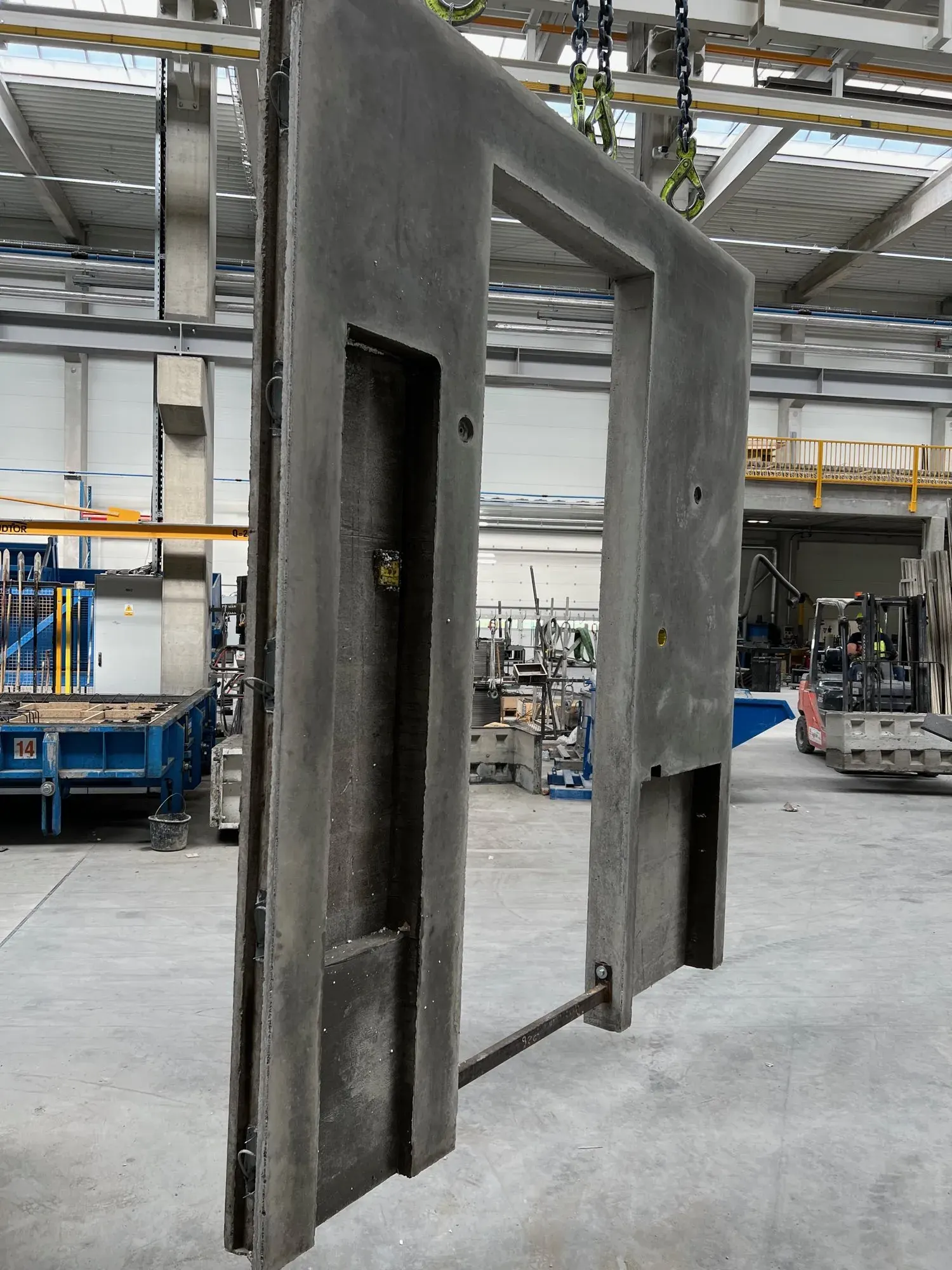
We produce our solid walls in thicknesses from 100 to 240 mm, in elements up to 3.85 × 9.00 m, in classes from LC12/13 to C20/25, with sound insulation up to 59.3 dB.
If a manufacturer only says "concrete", ask about the class and the density, because warmth, acoustics and the mass the crane has to lift all depend on them.
What is needed for a quotation
A quotation needs neither a model nor shop drawings. Dimensioned plans, sections and elevations, plus the location of the site, are enough. On that basis we prepare the element selection, the schedule and the quotation, usually in about a week.
A quotation without documentation, "per square metre", tells you nothing, because the same square metre costs differently depending on thickness, concrete class, reinforcement and the number of openings. What makes up the price is set out in a separate article: how much precast concrete elements cost.
Until when the design can change
In precast the decisions are taken before production, so ask up to what point a change is still possible. With us every project is created as a model in Tekla Structures, and until the shop drawings are approved, moving a window, adding an electrical box or changing the spacing of openings is an edit to the model.
After casting, a change means a new element. A manufacturer who sets boxes, conduits and penetrations in the mould needs the services routing before production, so the electrician and the plumber have to finalise their runs earlier than on a masonry site.
Transport and erection
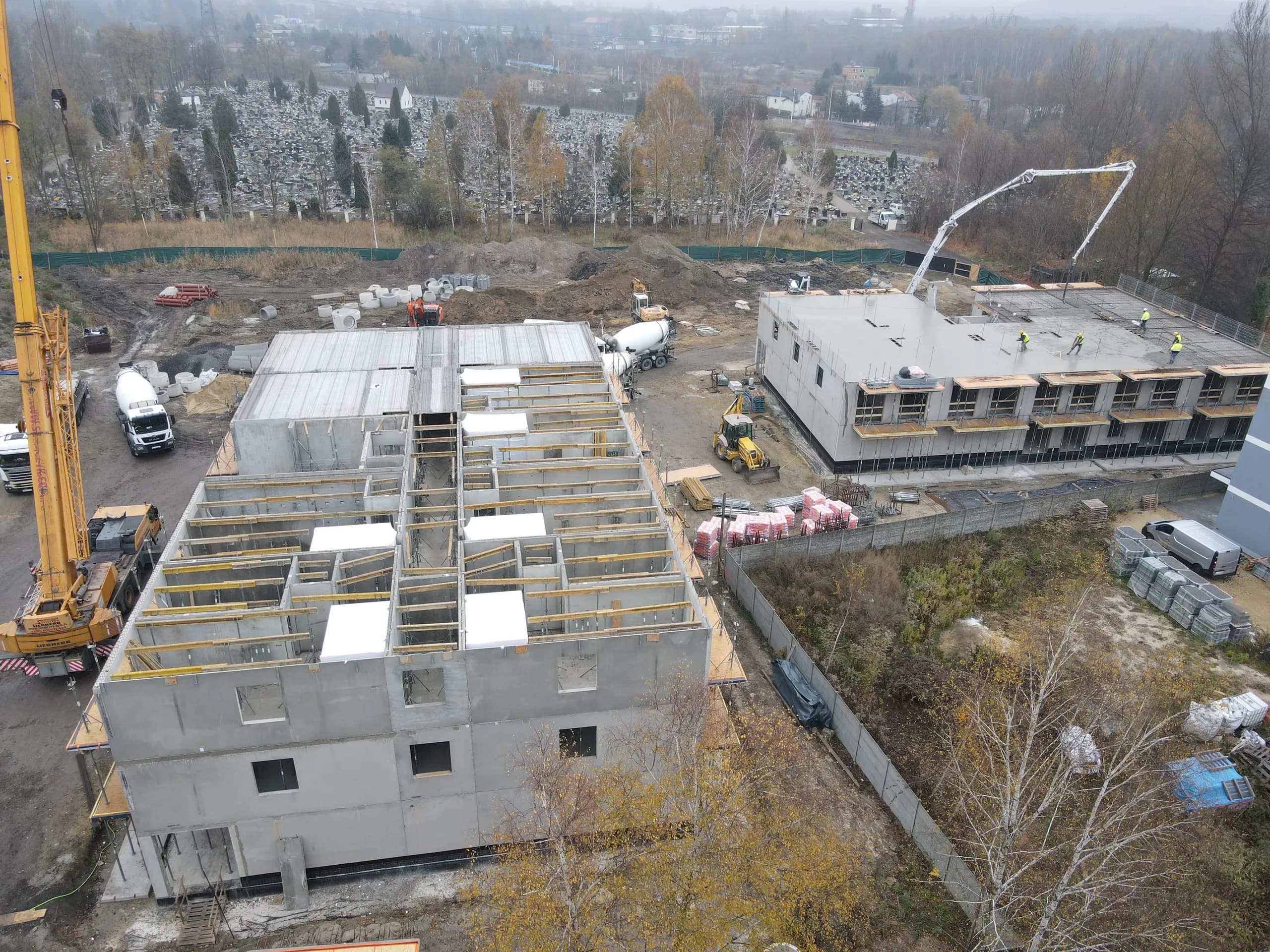
Ask who delivers and who erects. A wall up to 3.85 × 9.00 m travels on a standard rig, but it has to arrive in erection order and come off the trailer straight into position.
We deliver elements across Poland and to Germany, the Czech Republic, Slovakia, Denmark and Sweden, within a radius of nearly 1,000 km from the plant in Międzyrzecz, using the fleets of regular external hauliers; twenty to fifty rigs leave the plant every day. How deliveries are planned is described in the article on delivery logistics.
Under our contract terms the delivery instructions are agreed three weeks before the date, and unloading takes up to two hours from the moment the rig enters the site, so the site has to be ready for it: access for the rig, a crane position within reach of all the elements, and room for the temporary props.
Exactly what to check on the plot is described in the article plot, access, crane.
Tolerances and acceptance
An element made in a plant has dimensional tolerances that need to be known before acceptance, because they determine what counts as a defect and what counts as normal. The manufacturer should state them in writing; our acceptance rules are on the compliance and certificates page.
If the investor is accounting for the building's carbon footprint, for instance in BREEAM or LEED certification, it is also worth asking about the EPD environmental declaration, which we describe on the sustainability page.
Payment security
A precast manufacturer starts incurring costs long before erection: designing, buying steel and producing made-to-measure elements that cannot be sold to anyone else. On placing an order, then, expect a deposit or a payment guarantee, from a bank or an insurer, with the remaining payments spread across the delivery schedule.
That is normal practice in this technology, not a warning sign.
So where to buy
Directly from a manufacturer who designs, produces and erects in-house, and who will show you a certificate, tolerances and projects similar to your own house. Our walls are made in Międzyrzecz in the Lubusz Voivodeship and travel to sites across the country, from Pomerania to Silesia.
We prepare a quotation from plans and sections, and the list of completed single-family houses can be seen under projects.